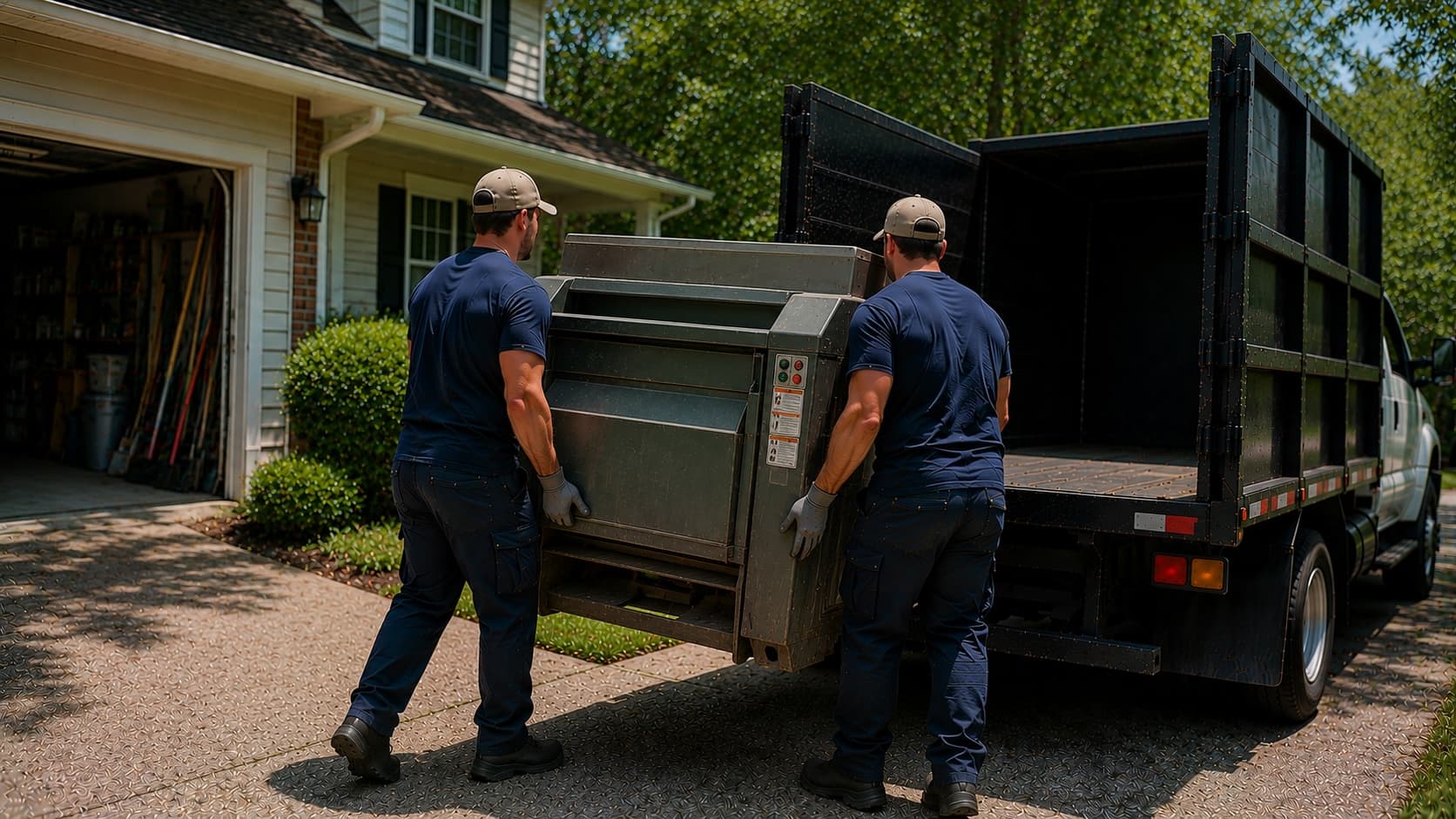
Pulling an Old Trash Compactor From a Brunswick Kitchen
Same-Day Trash Compactor Removal in Brunswick Often Available — Call or Text
Pricing
How pricing works.
What trash compactor removal costs here. We price by the tier your items fill, starting at $95–$150 for a 1/8 truck; a single item is quoted from a photo so we can confirm the tier before anything is loaded. The number you agree to is the number you pay, and it includes carry-out, the disposal fee and cleanup.
Trash compactor pricing scales with the unit, the access, and where the kitchen sits in the house. A freestanding compactor wheeled out of a ground-floor kitchen is the quick version. A heavy built-in wedged into a tight cabinet slot, with stairs between the kitchen and the truck, is the slower one. We give you the number before we touch the unit.
Compactors are very often part of a larger kitchen job, and that’s usually the cheaper way to do it. When we’re already pulling a dishwasher, a range, or a refrigerator on the same trip, the compactor rides along on the same load rather than carrying the cost of a trip by itself. Tell us everything that’s coming out and we’ll price the whole kitchen together.
Part of our Appliance Removal service
Kitchen trash compactors are one of those appliances that almost nobody installs anymore but plenty of Golden Isles kitchens still have. The built-in ones slide into a 15-inch cabinet slot — a gap left open between the lower cabinets, usually next to the sink or the dishwasher. When the compactor finally quits, or the kitchen gets a refresh, that slot is what’s left behind, and the unit has to come out before anything new goes in.
The units themselves are heavier than they look. A compactor is built around a motor and a ram that crushes a full bag down to a fraction of its size, so the body is dense even when it’s empty. Older models — and most of the ones we pull are old — were built when appliances were made out of more steel. Freestanding and drawer-style compactors are out there too, but the cabinet-slot built-in is the version we see most often around here.
What we do is straightforward: if the compactor is a corded, plug-in unit, we unplug it, work it free of the cabinet, and carry it out. If it’s hardwired in instead of corded, send a photo and we’ll help figure out what’s needed on the electrical side and work around it; then we pull it from the cabinet and haul it. The appliance is leaving regardless. The cabinet, the floor, and the countertop edge should look the same after we’re gone as they did before we showed up.
What we haul
Specifically, what we take for trash compactor removal.
- Built-in cabinet trash compactors (15-inch slot units)
- Freestanding trash compactors
- Drawer-style and convertible compactors
- Older steel-bodied compactors from kitchen remodels
- Compactors that have already stopped working
- Compactors pulled as part of a multi-appliance kitchen job
How we work
Pulling a Trash Compactor From a Brunswick Kitchen
Most built-in compactors live in a 15-inch slot between the lower cabinets. The first thing we do is get to the back or the side of the unit. If it’s a corded, plug-in unit, we unplug it; a hardwired one gets its disconnect sorted out with you first. From there it’s a matter of backing the body out of the slot without dragging it across the cabinet face or the flooring.
Older compactors are dense and bottom-heavy, so they come out low and controlled rather than tilted up and walked. If the unit was set in before the surrounding cabinetry or flooring went down, the slot can be a tighter fit than it looks, and we work the angle instead of forcing it. Drawer-style and freestanding units are simpler to free but carry the same weight.
A lot of these calls come during a kitchen remodel or an upgrade — someone is reclaiming the cabinet space, swapping in a different appliance, or just clearing out a unit that died years ago and never got replaced. We coordinate around the rest of the work so the slot is empty when the contractor or the new appliance needs it.
A built-in compactor can turn up in just about any Brunswick kitchen, from a house in Parkwood to an older home in Old Town Brunswick where the kitchen got updated at some point along the way. What decides the day is the slot: whether newer cabinets or flooring went in around the unit after it was set, and whether it plugs in or is wired in. A photo of the front and one of the cabinet beside it is enough for us to plan the angle out. When it’s part of a kitchen refresh, the old range, microwave or dishwasher can leave on the same trip, and that holds in every corner of Brunswick.
Ready when you are
Need trash compactor removal hauled away? We can help.
When licensed electrical or plumbing work is needed, that’s normally handled by you or a licensed pro. Show us what you have and where it is, and we’ll help figure out what’s needed and work around it.
Questions
Frequently asked questions about trash compactor removal.
Related items
Other things people pair with this haul.
Microwave Removal
A countertop unit is a lift and a walk to the truck.
Read moreDishwasher Removal
Most dishwasher jobs are quick start to finish.
Read moreStove and Oven Removal
Electric stove removal is straightforward.
Read moreAir Conditioner Removal
Window AC units are the simplest version.
Read moreDehumidifier Removal
Most dehumidifier jobs are quick.
Read moreDryer Removal
Most dryer-only jobs are straightforward.
Read more
Common in
Where we haul trash compactor removal most.
We haul trash compactor removal regularly across the Golden Isles, especially in Brunswick, St. Simons Island, Jekyll Island, Sea Island, and Darien.
Serving Brunswick and St. Simons Island.
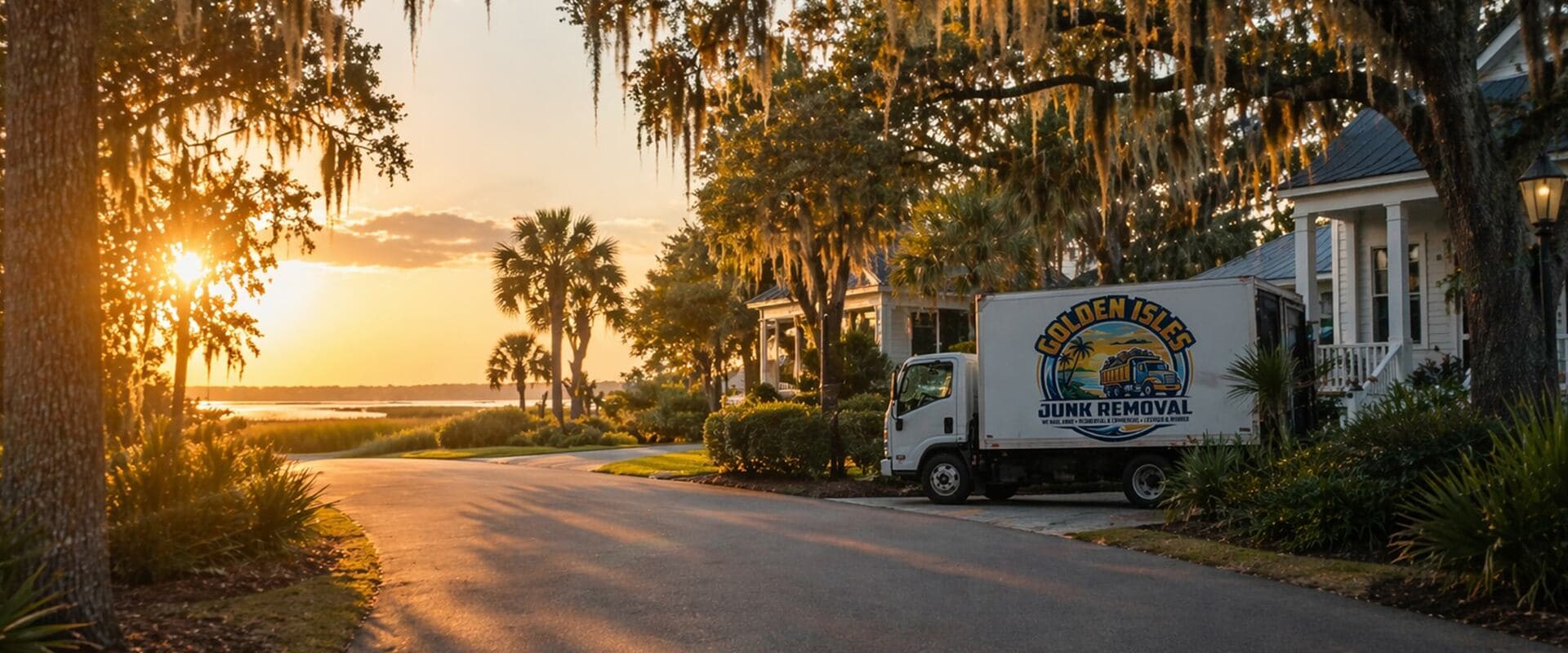
Trash Compactor Removal is handled out of our Brunswick base, across Glynn County and the Golden Isles. Same-day pickup is often available — call or text for the next available opening.
Ready when you are
Ready to get it out of your driveway?
Get a firm price from photos. Same-day pickup often available across the Golden Isles.
Get a free estimate onlineOpen Mon–Sat 7:30am–10pm · Sunday 9am–7pm
Last reviewed: June 25, 2026