Appliance
Stove and oven removal across the Golden Isles.
Electric, gas, induction. Slide-in ranges, freestanding stoves, wall ovens, double ovens. Electric units we unplug and haul; for gas, have the line capped by your plumber or gas pro first, then we take it from there.
The short version
Stove and Oven Removal at a glance.
- What it is
- Removal of ranges, ovens, and cooktops — electric and gas — hauled once disconnected and routed to scrap-metal recyclers.
- What’s included
- Freestanding ranges and wall ovens
- Electric and gas cooktops
- Slide-in and drop-in units
- Two-person carry-out and stair handling
- Scrap-metal recycling routing
- How pricing works
- Priced by unit, access, and floor. Plug-in units we unplug; a gas line or hardwired electrical is disconnected and made safe by you or a licensed trade first. Quoted before we touch the unit.
Part of our Appliance Removal service
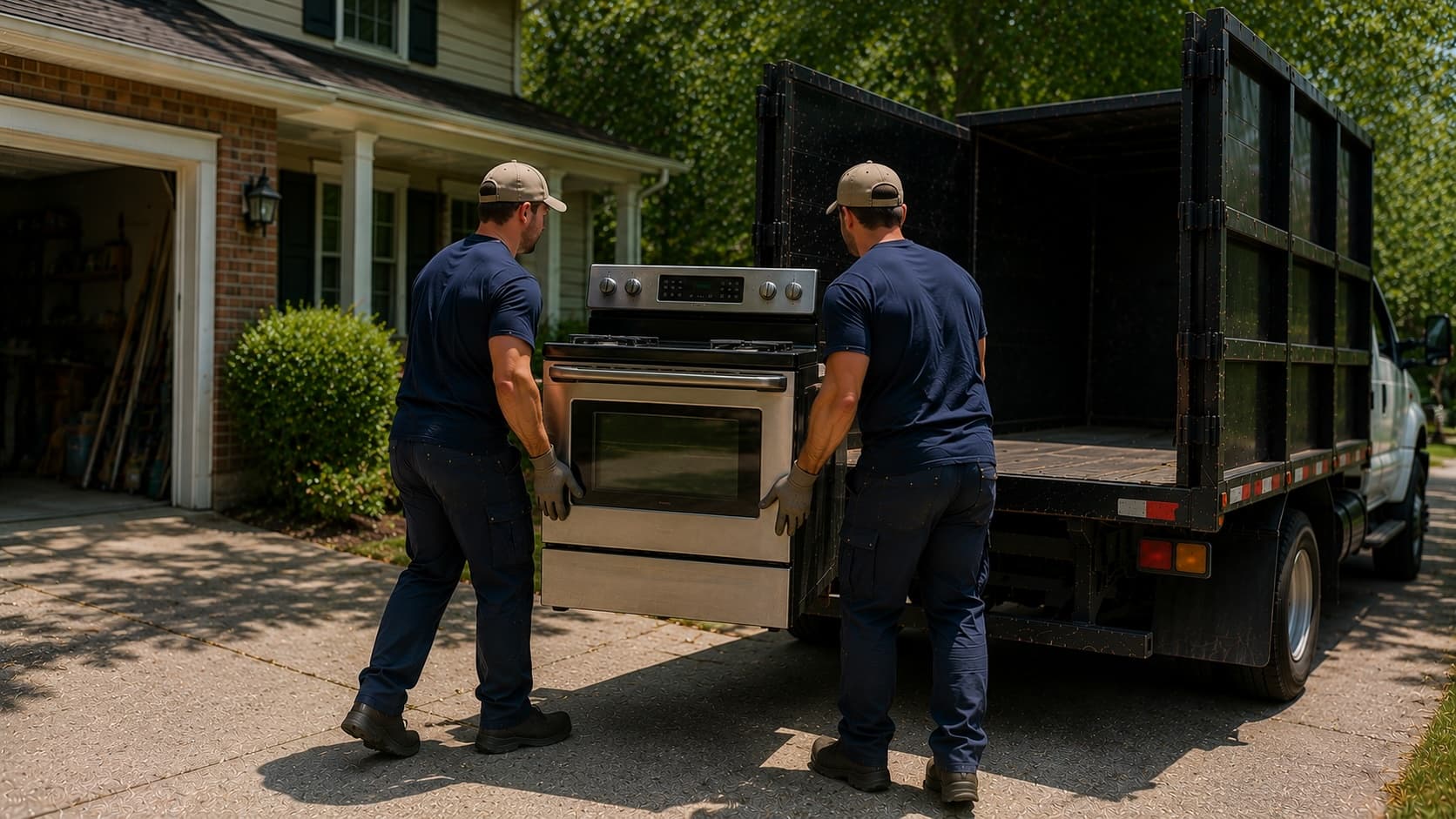
Stove and oven removal splits cleanly into two operational tracks: electric and gas. Electric stoves are the simpler version — pull from the wall, unplug from the 240-volt outlet behind the unit, carry out. Gas stoves need one thing handled before we arrive: the flexible gas line has to be properly capped at the shutoff valve, and that’s work for the customer or a licensed plumber or gas professional. We don’t cut, cap, or modify gas lines — once the line is safely capped, the haul is the easy part.
The most common call is the homeowner replacing a failed range or upgrading during a kitchen remodel. New stove arrives Wednesday, old one needs to leave Thursday. Sometimes the call is from a remodeler clearing the kitchen before demolition starts. Sometimes the call is from a property manager between tenants when the previous tenant burned through the heating elements or cracked the glass top.
Wall ovens and double ovens are their own category. Wall ovens are built into the cabinetry — there are mounting brackets and screws that hold the unit into the wall opening, and pulling them requires unscrewing the brackets and supporting the weight as the oven slides forward. Double ovens are heavy enough that we bring three crew members or an appliance dolly with a stair-climber rating. Slide-in ranges sometimes need the counter trim removed before the stove will clear; that’s extra work but it’s not unusual work.
Gas stoves are where the scope line matters most: the gas line gets disconnected and capped at the shutoff valve by the customer or a licensed gas professional before we arrive. We confirm it’s safe, then we haul. We don’t cut gas lines, we don’t modify gas piping, and we don’t do electrical circuit work — for plug-in electric units we simply unplug at the outlet, and anything beyond that on the electrical side is for a licensed electrician. The line is safe, the appliance leaves. That’s the scope.
What we haul
Specifically, what we take for stove and oven removal.
- Electric coil-top stoves
- Glass-top electric stoves (smooth-top ranges)
- Induction cooktops and induction ranges
- Gas stoves and gas ranges (line capped by your plumber or gas pro first)
- Dual-fuel ranges (gas top, electric oven)
- Slide-in ranges (with counter trim release if needed)
- Freestanding ranges
- Wall ovens — single, double, and combination microwave-oven units
- Cooktops (separate from oven, drop-in or slide-in)
- Gas, electric, and induction cooktops
- Over-the-range microwaves (mounted above the stove)
- Built-in and countertop microwaves
- Range hoods and vent hoods (ducted and ductless)
- Range-hood and over-range microwave combos taken together with the stove
- Vintage stoves and ranges from estate cleanouts
How we work
How we actually handle it.
Electric stove removal is straightforward. Pull from the wall, unplug from the 240-volt outlet behind the unit, two-person carry to the truck. The 240-volt outlet stays in the wall for the next stove. Most electric ranges run thirty to forty-five minutes start to finish.
Gas stoves need one step done before our truck shows up: the gas line disconnected and capped at the shutoff valve by the customer or a licensed gas professional. When we arrive we confirm the line is safe, then handle the haul. Gas stoves also use 120-volt power for the ignition and clock — if it’s a standard plug, we unplug it; if it’s anything beyond that, a licensed electrician handles the disconnect first. We don’t close valves, uncouple lines, or cap gas piping ourselves.
Wall ovens take longer. The oven sits in a built-in cabinet opening with mounting brackets at the top of the unit. Two screws on each side typically. The screws release, the oven slides forward on its own brackets, and we lift it down to the dolly. Double wall ovens are heavy enough that the second person becomes a third person — we don’t carry double ovens with two people unless the access is exceptional.
Pricing
How pricing works.
Stove and oven pricing scales with type, weight, and access. A freestanding electric range from a main-floor kitchen is the lightest version. A double wall oven from an upstairs kitchen is the heaviest. Gas and electric stoves price the same on our side — the unit and the access are the work. Just have the gas line capped by your plumber or gas pro before pickup.
Phone quotes work for stove and oven jobs as long as we know the type (electric vs gas vs dual-fuel), the install (freestanding vs slide-in vs wall oven), and the floor. Photos help when the kitchen is unusual or when the unit is a vintage piece from an estate cleanout where the install method isn’t standard.
Multi-appliance jobs — stove plus refrigerator, plus dishwasher, plus microwave — are common during kitchen remodels and price better per unit than single-appliance pickups.
Ready when you are
Need stove and oven removal hauled away? We can help.
The honest exceptions
What we won’t take — for this item.
A short, honest list of edge cases we either won’t take or want to discuss before we show up. When in doubt, call us — we’ll walk through it before scheduling.
- Gas-line work of any kind — disconnecting, capping, or modifying gas piping (a licensed plumber or gas pro does this before we haul)
- Electrical circuit modifications, breaker panel work, or rewiring beyond unplugging at the unit
- Salvage of working stove components (heating elements, glass tops, oven boards) for resale
- Built-in stove installations requiring carpentry beyond standard bracket release
Questions
Frequently asked questions about stove and oven removal.
Related items
Other things people pair with this haul.
Refrigerator Removal
Refrigerator removal routes the unit to an appliance recycler that handles refrigerant recovery on its end — you don’t do anything beforehand.
Read moreDishwasher Removal
Most dishwasher jobs run thirty minutes start to finish.
Read moreFreezer Removal
Most freezer jobs run thirty to sixty minutes depending on whether the unit is empty or full.
Read moreWasher & Dryer Removal
Most washer and dryer jobs start at the wall — water lines disconnected, vent unhooked, then a dolly out.
Read moreGarbage Disposal Removal
Garbage disposal removal is a short job on our end because the part that takes skill happens before we get there.
Read moreTrash Compactor Removal
Most built-in compactors live in a 15-inch slot between the lower cabinets.
Read moreMicrowave Removal
A countertop unit is a lift and a walk to the truck.
Read more
Common in
Where we haul stove and oven removal most.
We haul stove and oven removal regularly across the Golden Isles, especially in Brunswick, St. Simons Island, Kingsland, Darien, and Jekyll Island.
Ready when you are
Ready to get it out of your driveway?
Free quote in 60 seconds. Same-day pickup available across the Golden Isles.
Open Mon–Sat 7:30am–10pm · Sunday 9am–7pm
Last reviewed: April 27, 2026