Service category
Light demolition across the Golden Isles.
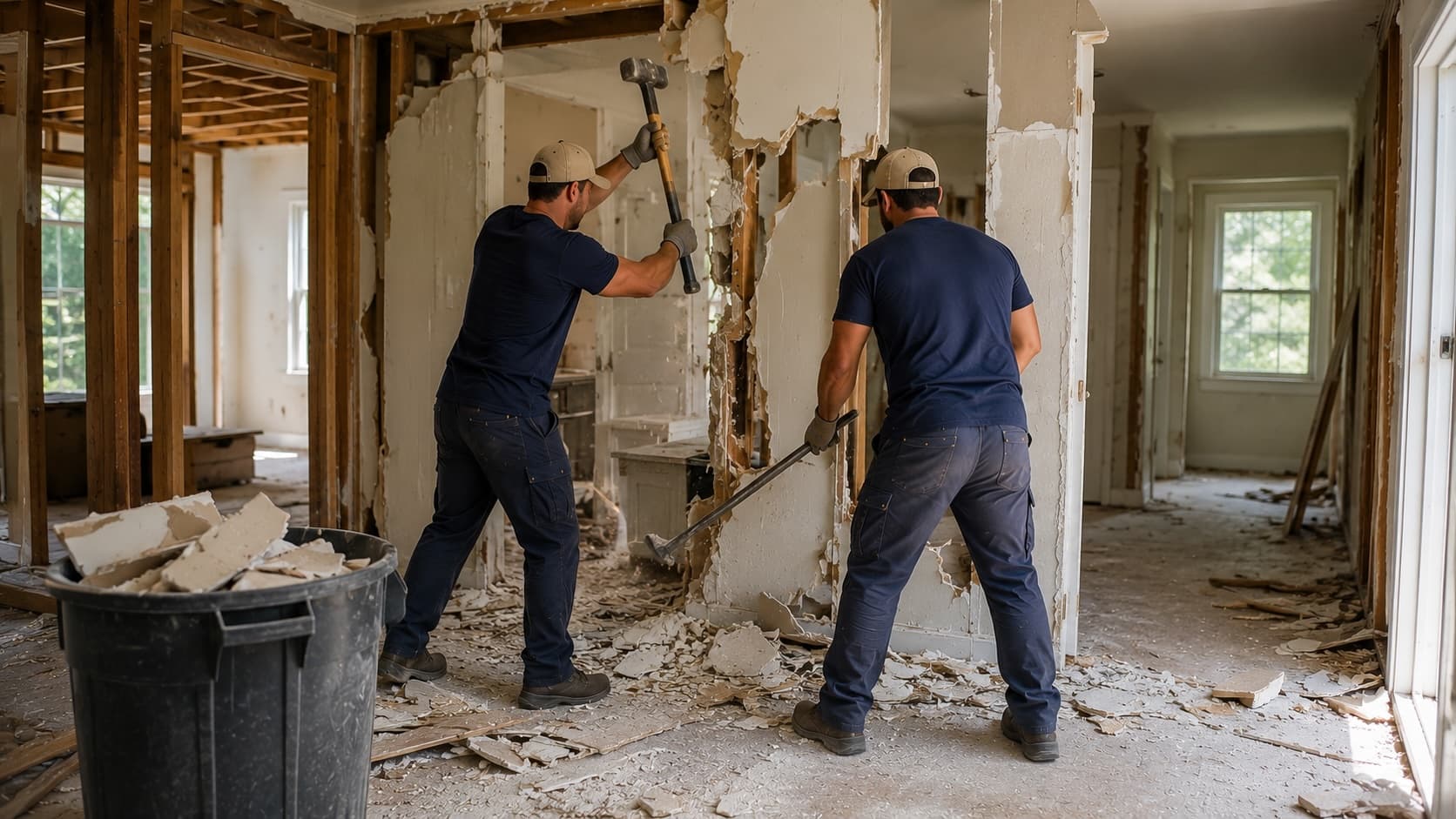
Sheds, decks, fences, playsets, gazebos, above-ground pools, hot tubs, and interior non-structural tear-out. Demolition plus haul-away in one visit — the structure comes apart and leaves with us in the same trip.
The short version
Light Demolition at a glance.
- What it is
- Non-structural demolition plus haul-away in one visit — sheds, decks, fences, playsets, hot tubs, and interior tear-out come apart on site and leave the same trip.
- What’s included
- Sheds, decks, fences, and gazebos
- Playsets, trampolines, and above-ground pools
- Hot tubs (cut down on site)
- Interior non-structural tear-out (paneling, drop ceilings, non-load-bearing partitions)
- Cleanup and haul in the same visit
- How pricing works
- Priced by the structure’s size, construction, and access, plus debris volume. Non-structural — load-bearing and engineered work is a licensed structural contractor, though we pull permits for freestanding-structure teardowns that need them; utilities are disconnected by a licensed trade first, and concrete pads are a separate scope.
Light demolition is the work that sits between regular junk hauling and full structural construction. Sheds rotting in the back yard, decks built on the cheap that need to come down before the new addition, playsets the kids outgrew a decade ago, fences leaning sideways since the last storm, gazebos and pergolas that didn't survive the salt air, above-ground pools, hot tubs, and the interior tear-out before a remodel — paneling, drop ceilings, non-load-bearing partitions, built-ins. The structures come apart on site, the pieces load on the truck, and the space goes back to being usable in the same visit.
This page is the hub for that whole cluster. Each kind of structure has its own dedicated page with the specifics — shed disposal, deck removal, fence removal, hot tub disposal, above-ground pool removal, playset and swingset removal, and the rest — and they all link back here. If you came in from one of those, this is the parent that explains how the demolition-plus-haul approach works across all of them.
One practical thing worth setting expectations on, because it is true of nearly every shed we take down: the shed is still full. Almost nobody empties it first, and that is usually part of why they called. Garden tools, old furniture, paint cans, holiday decorations, hardware, things they forgot they owned. So the contents come out before anything structural happens — emptied, sorted into what you are keeping and what is going — and on a well-stocked shed that stage can take as long as the demolition does. It is worth mentioning on the call so the estimate reflects the real job.
After that it is strictly top down, in the reverse of how the thing was built. Roofing first, then sheathing or wall panels, then framing, then the floor, then whatever foundation work you want. You never pull a wall while the roof is still resting on it. That sounds obvious written down; it is also exactly how people get hurt doing this themselves on a Saturday.
The crew that handles hot-tub removal handles this category. Same approach everywhere: disassemble in place with hand and power tools, load the pieces, sweep the area, and leave the surrounding property intact. The deck comes down without damaging the siding it was attached to; the fence comes out without tearing up the neighbor's side; the interior partition comes out without touching the load-bearing structure around it.
The boundary is firm and we state it up front: non-structural only. Load-bearing walls, framing, additions, and anything that changes the building envelope are out of our scope — that's a licensed structural contractor with engineering. What we do handle is the permit side of the freestanding-structure work: when a shed, deck, fence, carport, or pergola teardown needs a demolition permit, we pull it or coordinate with the permit holder so the job is done on the books, not off them. Electrical, plumbing, gas, and HVAC connections are disconnected and made safe by you or a licensed trade before we touch the structure. We demolish and haul the freestanding structures; we don't engineer structural teardowns.
Who calls us
Who we run this work for.
Homeowners clearing the back yard — a collapsing shed, a deck that's gone soft, a fence the last storm finished off, a playset or trampoline the kids outgrew, a gazebo the salt air took. The structure has to come down and leave, and they don't want two separate crews for the demo and the haul.
Homeowners and remodelers prepping for the next phase. The old deck comes off before the new addition; the above-ground pool comes out before the yard gets re-graded; the interior paneling, drop ceiling, and non-load-bearing partition come out before the remodel starts. We do the tear-out and the haul so the contractor walks into a clear space.
Real estate agents and property managers getting a property ready. A leaning fence, a derelict shed, or a dead hot tub kills a listing photo and a walkthrough. We clear the eyesores to a clean, level yard.
Customers who got a quote from a general contractor and found out structural-grade demo pricing is overkill for a shed and a fence. Light demolition is priced for what it is — disassembly and haul, not engineered teardown.
How we do it
From the call to the haul.
Most light-demolition jobs start with a walkthrough or a photo set so the quote reflects the real structure, its condition, the access, and what's underneath or attached. Multi-section decks, large sheds, and gazebos with footings benefit from a five-minute look; simpler jobs scope fine from photos. The walkthrough is free, no obligation.
Before anything comes apart, the utilities get handled. A shed or hot tub with power, a structure with a gas line, anything with a plumbing or electrical connection — those are disconnected and made safe by you or a licensed trade first. We don't do electrical, plumbing, gas, or HVAC work. Once the structure is disconnected and clear, our crew arrives with the truck, pry bars, saws, drills, and floor or ground protection.
The structure comes apart in place. Decking and framing get cut to haulable lengths, fence panels and posts get pulled, shed walls and roofs come down in sections, interior partitions and paneling get pulled back to the studs that stay. Everything loads and leaves in the same trip wherever volume allows. We sweep the area, leave the surrounding property intact, and route reusable material and metal to recyclers where possible — routed where possible, not guaranteed.
What’s in scope
What we haul, and what we won’t.
What we haul in this category
- Sheds and outbuildings — wood, metal, vinyl, and plastic
- Decks, deck framing, railings, stairs, and attached platforms
- Fences and gates — wood, chain-link, vinyl, and panel sections, plus posts
- Gazebos, pergolas, arbors, trellises, and free-standing patio structures
- Playsets, swingsets, playhouses, trampolines, and basketball goals
- Above-ground pools, pool decking, and pool equipment
- Hot tubs and spas (cut down on site — see hot tub disposal)
- Carports, awnings, patio covers, and sun shades
- Greenhouses, chicken coops, dog kennels, and raised garden beds
- Interior non-structural tear-out — wood paneling, drop ceilings, non-load-bearing partitions, built-in cabinets and shelving, closets
What we won’t take
- Load-bearing walls, framing, additions, or anything that changes the building envelope — that's licensed structural demolition
- Engineered or structural teardowns requiring a licensed demolition contractor — we pull permits for freestanding-structure work, but we don't hold a Georgia structural demolition license
- Electrical, plumbing, gas, or HVAC disconnection — utilities must be disconnected and made safe by you or a licensed trade before we demolish
- Concrete pad, footing, and slab removal as part of the base job — available only as a separately scoped line
- Asbestos-containing siding, roofing, or flooring from older structures — referred to a licensed abatement specialist
Pricing
How pricing works on these jobs.
Light-demolition pricing scales with the size and construction of the structure, the access, the condition, and the volume of debris it produces. A single small shed or a short fence run on an open lot is the lightest version. A multi-section deck, a large outbuilding, a gazebo on footings, or an above-ground pool with a deck around it is the heaviest, and larger jobs run multi-day priced as such.
Construction matters as much as size. A deck held together with screws comes apart faster than one bolted and glued; a chain-link fence pulls faster than a block-set privacy fence; a tear-out where the studs stay is lighter than one where everything down to the subfloor goes. We tell you the cost driver after we see the structure. We don't invent dollar figures for demolition we haven't looked at.
What's underneath is a separate conversation. Standard light demolition removes the above-ground structure and leaves concrete pads, footings, and slabs intact. If you want the pad gone too, we scope it together as a separate line — but it isn't part of the base demolition.
Outdoor structures: sheds, decks, fences, gazebos
Outdoor structures are the bulk of light-demolition work. Sheds and outbuildings come down in sections — walls, roof, floor — and load out the same day. Decks come apart by cutting the decking and framing to haulable lengths and pulling the posts, without damaging the siding or wall the deck was ledger-bolted to. Fences pull panel by panel, posts and all, across single or multiple property lines. Gazebos, pergolas, arbors, and free-standing patio structures come apart with hand and power tools.
Each of these has its own dedicated page with the specifics — shed disposal, deck removal, fence removal, pergola removal, and carport removal cover the construction types, the access questions, and what to expect. This hub is where the shared approach lives: disassemble in place, haul in the same trip, leave the yard clean and the surrounding property intact.
Storm-damaged outdoor structures often come in alongside other debris — those route through our storm and hurricane debris removal when a storm brought them down.
Recreation structures: playsets, pools, hot tubs, trampolines
Recreation structures are the back-yard demolition most families call about: the playset and swingset the kids outgrew, the trampoline that's been rusting through, the basketball goal set in concrete, the above-ground pool, and the hot tub. They come apart in place and leave the same trip.
Hot tubs are the heaviest of these and have their own established process — drained, cut down on site, and hauled, with the power disconnected at the box by you or a licensed electrician first. Our hot-tub removal page covers that work in full, and the same crew runs it. Above-ground pools and pool equipment come out the same way: disassemble, haul, and leave the ground ready for whatever's next.
What's underneath stays a separate conversation — a basketball goal or playset anchor set in a concrete footing means the footing is its own scoped line, not part of the base demolition.
Interior non-structural tear-out
Before a remodel, the non-structural interior has to come out, and that tear-out is light-demolition work: wood paneling pulled off the walls, drop ceilings taken down, non-load-bearing partitions removed, built-in cabinets and shelving and closets demolished back to the studs and surfaces that stay. We do the tear-out and haul the debris so the contractor or the next trade walks into a clear space.
The line we hold is structural. We remove what isn't holding the building up. Load-bearing walls, framing, and anything that changes the structure are a licensed contractor's permitted scope — we don't touch those, and we'll tell you on the walkthrough which walls are which when it isn't obvious. Electrical, plumbing, and HVAC in the area get disconnected by a licensed trade before we pull anything.
The debris from interior tear-out — drywall, paneling, flooring, cabinetry — routes through our construction-debris removal, which is set up for that material and its disposal routing.
Permits and permit handling
Most freestanding-structure work here — a backyard shed, a deck, a fence run, a pergola, a carport — doesn't require a demolition permit at all. When a teardown does need one, we handle it rather than hand it back to you: we pull the permit ourselves or coordinate with the permit holder so the job is done on the books and inspected where the county wants it inspected. That's a real, confirmed part of what we do on freestanding structures.
What that doesn't mean is engineered structural demolition. We don't hold a Georgia structural demolition license, and we don't take down load-bearing walls, additions, or anything that changes the building envelope — that work belongs to a licensed demolition contractor, and we'll tell you plainly when a job crosses that line. The permit capability covers the freestanding-structure demolition we already do; it doesn't stretch our scope into the structural side.
The practical version: if your shed, deck, fence, carport, or pergola needs a permit to come down, that isn't a reason to call someone else — it's something we fold into the job. If the structure is load-bearing or part of the building itself, that's the licensed contractor's permit and scope, not ours.
The non-structural boundary, stated plainly
Light demolition means non-structural demolition. That's not a hedge — it's the line that keeps the work safe, legal, and correctly priced. We remove sheds, decks, fences, playsets, pools, hot tubs, outdoor structures, and interior non-load-bearing elements. We do not remove load-bearing walls, framing, or anything that changes the building envelope, and we do not do work that requires a demolition permit or structural engineering. That work belongs to a licensed contractor, and we'll point you toward one when a job crosses the line.
Utilities are the other firm boundary. Electrical, plumbing, gas, and HVAC connections are disconnected and made safe by you or the appropriate licensed trade before our crew demolishes anything. We don't do wiring, pipe, gas, or refrigerant work — where a structure has a live connection, the licensed trade handles it first, then we demolish and haul.
Being clear about this up front is the point. You get an honest scope, the right crew for the part we do, and a straight referral for the part we don't.
Doing this as part of your job?
We work differently for the pros.
For marinas & storage yards
Derelict boats, dead trailers, and abandoned property cleared out of space you could be renting. Old fiberglass hulls included.
See how it worksFor real estate agents & sellers
Pre-listing clearings planned backward from your photo date, probate and REO listings, and the exterior tear-outs that ruin a first photo.
See how it worksFor contractors & remodelers
Debris cleared between phases so the next trade walks into a clean space -- a scheduled one-trip haul, or a standing pickup when the volume repeats.
See how it works
In this category
Items we haul under light demolition.
- Shed DisposalSee shed disposal details →
- Deck RemovalSee deck removal details →
- Fence RemovalSee fence removal details →
- Hot Tub DisposalSee hot tub disposal details →
- Above-Ground Pool RemovalSee above-ground pool removal details →
- Playset & Swingset RemovalSee playset & swingset removal details →
- Trampoline RemovalSee trampoline removal details →
- Carport RemovalSee carport removal details →
- Pergola RemovalSee pergola removal details →
- Greenhouse RemovalSee greenhouse removal details →
- Non-Structural Wall RemovalSee non-structural wall removal details →
- Wood Paneling RemovalSee wood paneling removal details →
- Drop Ceiling RemovalSee drop ceiling removal details →
- Chicken Coop RemovalSee chicken coop removal details →
- Dog Kennel RemovalSee dog kennel removal details →
- Playhouse RemovalSee playhouse removal details →
- Basketball Goal RemovalSee basketball goal removal details →
- Fire Pit RemovalSee fire pit removal details →
- Raised Garden Bed RemovalSee raised garden bed removal details →
- Yard Fixture RemovalSee yard fixture removal details →
- Awning & Patio Cover RemovalSee awning & patio cover removal details →
- Pool Equipment RemovalSee pool equipment removal details →
- Boat RemovalSee boat removal details →
- RV & Travel Trailer RemovalSee rv & travel trailer removal details →
Where we run this work
Cities where light demolition runs high-volume.
Related services
Related categories you might also need.
- Dumpster RentalRoll-off dumpsters in four sizes, dropped at your door. You fill it, we haul it away.
- Hot Tubs & Light DemoHot tubs, spas, sheds, playsets, decks. We cut it down, we haul it out.
- Construction DebrisDrywall, flooring, framing, fixtures. For homeowners and GCs.
- Storm & Yard DebrisHurricane cleanup, fallen limbs, fence damage. Fast response after storms.
- Commercial & OfficeOffice furniture, retail fixtures, and warehouse cleanouts for Glynn County businesses.
- Furniture & MattressesSofas, sectionals, beds, dressers. In and out in under an hour.
Questions
Frequently asked questions about light demolition.
Ready when you are
Ready to get it out of your driveway?
Free quote in 60 seconds. Same-day pickup available across the Golden Isles.
Open Mon–Sat 7:30am–10pm · Sunday 9am–7pm
Last reviewed: June 27, 2026